What We Resist Persists

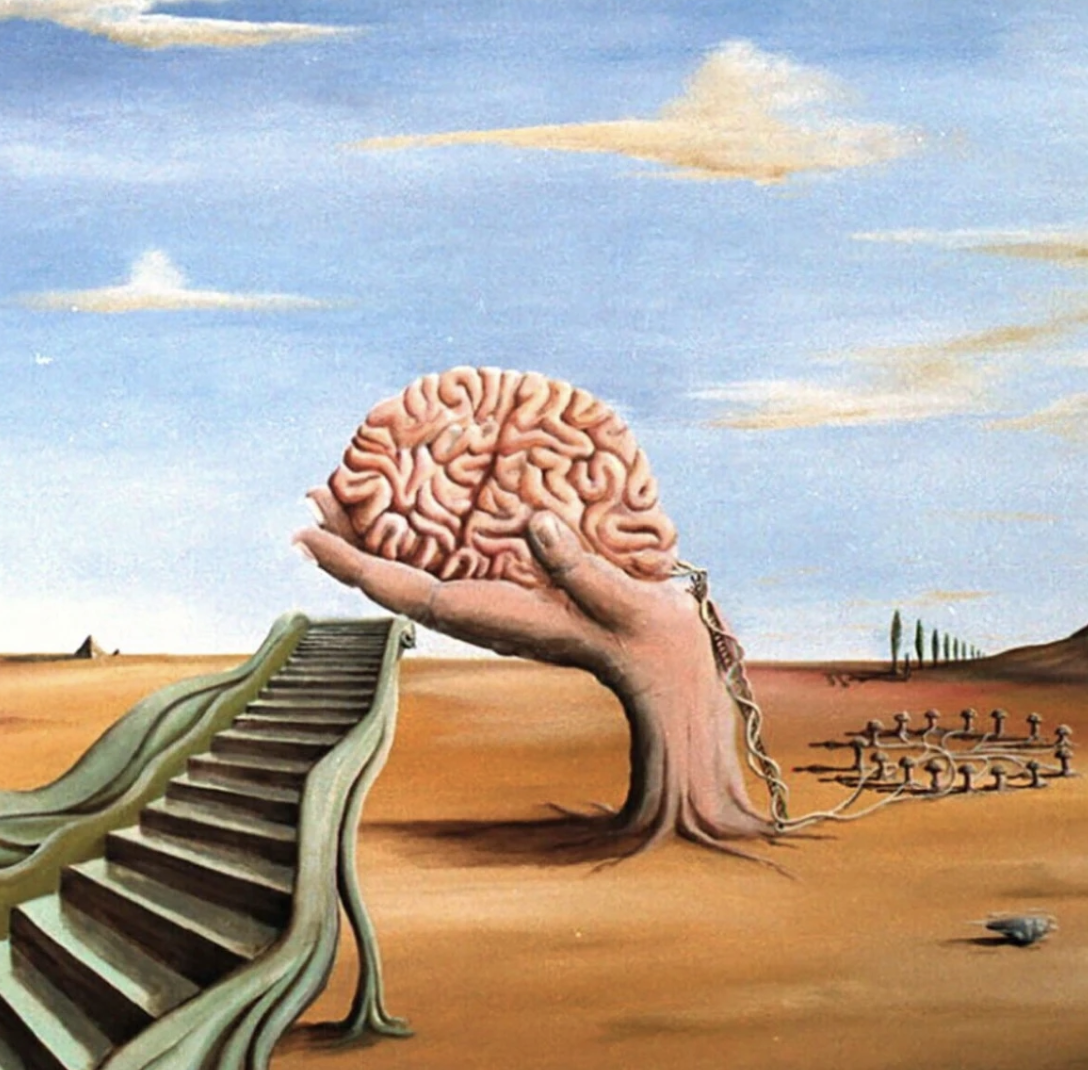
"Katie at Haleakala Crater" by Will Adler
Mental pain is less dramatic than physical pain, but it is more common and also more hard to bear. The frequent attempt to conceal mental pain increases the burden: it is easier to say ‘My tooth is aching’ than to say 'My heart is broken.’
—C. S. Lewis The Problem of Pain (1940)
Even though we live in one of the richest and most developed countries in history, we’re a society in chronic discomfort. We are aching all the time - back pain, neck pain, shoulder pain, hormonal imbalance, thyroid issues, irritable bowel, migraines, skin conditions - the list goes on. There’s insomnia, anxiety, depression, stress … we go to doctors, therapists, take pills, searching for explanations and cures, but frequently can’t put our finger on any one thing. And the pain persists.
The link between diet and mental and physical health is becoming more widely understood and I believe will greatly enhance our approach to these kinds of issues. But I think there’s something else at play here as well: We are avoiding our emotions.
We are avoiding our emotions and they’re getting trapped in our bodies and are being expressed as physical pain.
Yes, your emotions are wrecking you, but not because you feel them, it’s because you don't. When you repress / cut off your emotions, they don’t just go away. They stay in your body and eventually find a way to be heard. Sometimes when you feel pain, it's your body saying, "Listen to me. I would like to have a voice here. I would like to feel the things that I'm feeling." But often we subconsciously and reflexively shut it down, “You're not convenient, I don't want to hear you, leave me alone."
"Oh, you won't listen to me? How about a migraine? You'll listen to that. You’re going to stop what you're doing, you're going to go lay down, you're going to take a pill and you're going to turn off the lights. Gotcha now."
Dr. John Sarno, TMS
We have been trained and raised to believe that emotions are one thing, and our physical body is another. For example, I’ve spent the last year treating my neck and shoulder pain by buying dozens of expensive gizmos and getting the run-around from a series of doctors and physical therapists.
For certain kinds of chronic pain like mine, Dr. John Sarno’s theory of mind/body medicine, Tension Myositis Syndrome (TMS), rings true to me. TMS suggests that physical pain is created in our body in order to create a distraction so that undesirable emotions can be avoided and kept down. People joke that TMS stands for, “Telling Me Something.” That basically sums it up: Your body is trying to tell you something. See Dr. Sarno’s books The Mindbody Prescription and Healing Back Pain for more on TMS.
In order to embrace the concept of mind/body healing in full, let's start with the conditioning we receive as children to be, for example, good, nice, strong, or selfless. In trying so hard to be strong, you may not allow yourself to feel normal responses to difficult situations. Maybe you feel scared or hurt, maybe you’ve been ignored or rejected, but it can be easier and more socially acceptable to just let it go, not make it a big deal.
Sometimes even without any conscious awareness, you push down feelings of anger or resentment because you know those feelings aren’t “nice.” They aren’t acceptable. The moment you even begin to feel them, you become stressed, and your mind is in motion telling you all the reasons that thinking these dark thoughts will get you nowhere. So, you push them away and shove them down.
Repressed Emotions
Here’s what happens: These unfelt emotions build up and when the feelings reach critical mass, they finally refuse to be held down anymore. They start to rise to your consciousness, and threaten to inform you exactly how angry you are, or dissatisfied or sad.
Your brain says, “No! That’s not acceptable to feel those dark things. It does not assist in your survival!”
Remember, in some ways our brains are still primitive, operating in the same fight or flight techniques since the dawn of man. If the brain does not find something adaptive or imperative, it will do its best to protect us from it. Although feelings are actually safe to feel when given a voice in an appropriate manner, our minds do not understand this as of yet. When these feelings of anger, sadness, shame, embarrassment, regret, and fear threaten to rise into our conscious thoughts, the brain’s reaction is the same as if it is telling you to run from a woolly mammoth. You see, it thinks it is protecting you.
As the brain has this reaction in your subconscious, some place in your body seizes up, knots up, cramps up. Just like the headache you get when you’re stressed, the stomach ache when you’re about to give a speech, or the hives that break out when you’re on the spot, your body is responding to frustration.
The pain appears somewhere in your body, and Voila! The brain has done its job: It’s distracted you from the thoughts or feelings you didn’t want to have. They are naturally pushed back down as you have more important things to attend to, like altering the way you sit / sleep, researching alternative products / treatments, and plotting how to avoid future pain.
The process of recognizing and listening to our emotions gives a steam valve to this entire system, allowing feelings to safely evaporate into the air. Even though you might worry at first that feeling potentially dark things about people and events in your life will hurt “worse,” it is strikingly the opposite. Alongside pain elimination, people often feel unburdened, lighter, and more at peace.
Journal Exercise
Repressed emotions are only powerful in creating pain if they don't have a voice. Nobody needs to hear this voice but you. You may share if you choose, but you don't have to share this with anyone in order to heal.
The easiest and most effective way to give these feelings a voice is through journaling. Here is an exercise written by Dr. Sarno, which involves creating three bulleted lists. The first list is entitled childhood, the second is daily life, and the third is personality.
CHILDHOOD
Childhood refers to any memory, event, or reality that happened to you growing up, until you consider yourself no longer a child. It could be big things (trauma, divorce, abuse, violence). But it also could, and should, be the time in third grade when Susie left you out on the playground, or when you had stage fright and ran off the stage at the school play. It is an exhaustive list of everything that you can remember in childhood that makes you take notice. It’s everything that sticks with you, has effected the person you have become, or still fuels your desire to be a certain way.
DAILY LIFE
Daily life is the same kind of bulleted list. Everything that affects your day to day: your family, your partner, your business, your financial situation, or any responsibilities that you take on. Anything and everything that happens in your daily life that you think “Oh God, that's hard.” Even beautiful, happy things are hard. Having a child is hard. Anything that effects your life in a way that you need to work hard to deal with, tolerate, or accept should be put on the daily life list.
PERSONALITY
The third list is personality. We all have a personality. Most of the time it's shaped by the childhood stuff. Your compulsions to be a certain way, to look a certain way, to present a certain way, to achieve certain things. Think about the beliefs in you that direct you to behave certain ways in order to perceive yourself a certain way. Those things go into the personality list.
ATTACKING THE LISTS
You are going to create time for yourself every day. Right now, you might think, “I don't have any time.” Yes, you do. How much time do you spend on Instagram and Facebook a day? You have 20 minutes a day.
Then you are going to pick an item from one of these three lists. Look at your lists and say, "What pops out at me today, during this session?" You're going to write it at the top of the page, set a timer for 20 minutes, and just journal. Free write on the topic.
It's going to go in ways that you might not have expected but just go with it.
One of the things that's most important in this kind of journaling is that this is just for you. This is not journaling in some beautiful leather bound book that's going to tell the story of your life that you're going to read again one day. This shit is not pretty. Not every single thing you need to come up with is going to be dark. Some of it is just going to be the blah, blah, blah, which may end up leading you to the dark stuff. Also, this kind of journaling needs to be disposed of – it’s not meant to be kept.
This is not some pretty thing that you're going to keep. You are going to either write it into a document that you will erase before you even close your computer, or you will write it in your notebook and you will shred it into a public garbage can. This journaling is going to be something that you don't need to read again, because once you bring it to the surface and you take a moment to reflect on it, you've done the work. You've started to inform your conscious brain that these unconscious feelings are here, they are not going to kill you, and it's okay.
Your language should be emotional. It’s the language of your adult brain and the emotions of a five-year-old. It is, "Oh my God. This is not the way I want it to be. Everything is ruined. This is a complete disaster." It is not, "Oh, well. Today with the baby wasn't really so great, but that's okay. I'm going to be fine. It's all right if I feel alone. It's all right if I feel alienated, if I feel tired."
Once your brain is alerted that you don't need to hold down these ugly feelings anymore, that you do not need the physical pain, it will melt away. But you must be open to believing that an emotional exercise can actually heal you physically. And you must do the work. Little by little it will heal you.
REFERENCES
Nicole Sachs, The Cure for Chronic Pain
Thank you, Dr. Sarno
All the Rage, upcoming documentary about Dr. Sarno featuring Howard Stern, Larry David, Bernie Sanders (trailer here)

How to Stoke Sexual Desire?
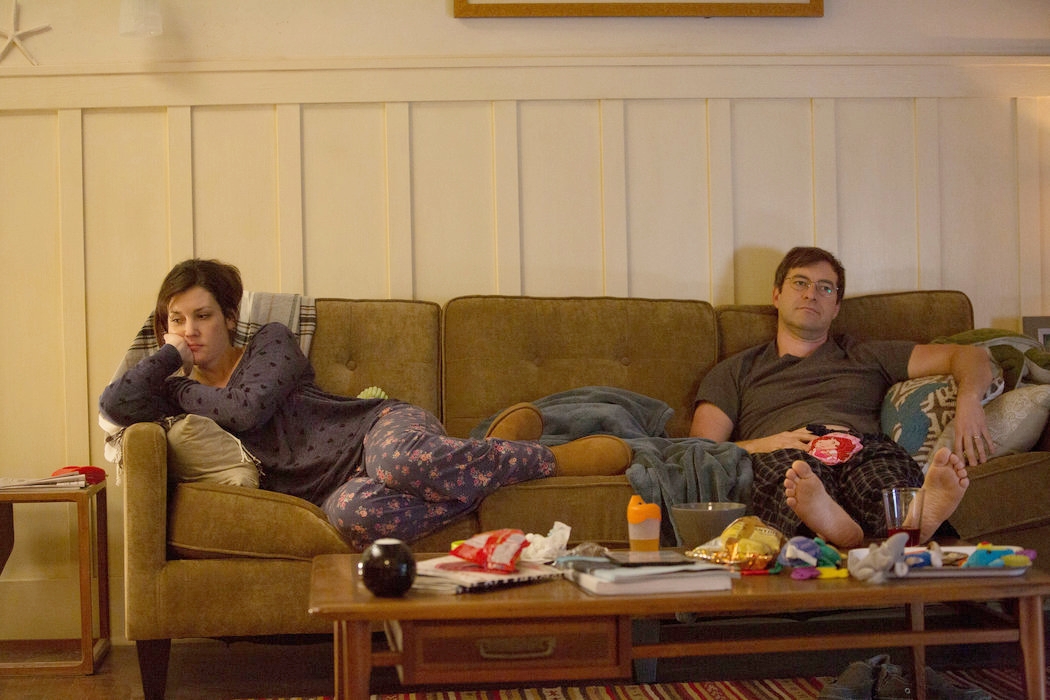
Melanie Lynskey & Mark Duplass in HBO's "Togetherness"
A spiritual approach to dating takes a gender-blind stance, addressing every person in the same way, and admonishes masculine / feminine roles as sexist games and manipulations. But men and women are different and gender roles show up in same sex relationships as well. While spiritual philosophies are foundational to my life, I am inclined to approach dating from a more gendered perspective. As always, feel free to disagree with some or all of what I write.
It seems to me that we contradict ourselves when it comes to dating. We say we want one thing, but actually are attracted to something else. We pursue people we know are unhealthy for us, while dismissing compatible, available, attractive potentials.
Ask a woman about her sexual fantasies and she’s likely to tell you they involve being desired and dominated. So she wants to mate with the stable, reliable, emotionally-attuned man and get fucked by the Bad Boy (a similar dynamic shows up with the Madonna/Whore complex in men). So what’s the psychology under this?
The reason why women like bad boys, says Esther Perel, is because the bad boy knows how to take care of himself perfectly well, which frees her from having to feel responsible for him, from having to worry about him. Since he can let go and be in his pleasure, it frees her up to do the same. The primary erotic block for women is that they are used to sex being a duty and that their role is to care for others. They struggle sexually in taking for themselves.
The patriarchal system has ingrained into women thousands of years of sexual duty and obligation. Men have sexual needs that must be met and they are paramount. He bought you dinner, you led him on, you owe him this. Break the entitlement of the stiff penis: no one will die if an erection goes untended!
Women are most free when not having to think of anyone else. Since she knows the bad boy will take care of himself, she’s able to focus on herself and experience healthy sexual narcissism. If the man needs to be mothered, she won’t be able to let go into her own pleasure. Once it becomes a duty, she’s no longer in the realm of desire.
Men also need to feel that their partners are strong enough to withstand their desire. If he feels she’s too fragile, he’s unable to submit fully to his sexual appetite. The aggression in sex is too dangerous to bring to someone he loves.
Many men grew up with mothers whose emotional needs engulfed and burdened them. So any whiff of a woman being needy sparks an anti-sexual, dutiful, caretaking response. Who wants to have sex with their mother? This dynamic with mother also leads men to become love avoidants. Why submit to another relationship in which you feel incredibly burdened and responsible for another person’s happiness? Much simpler to screw a woman with whom there’s no commitment.
TO RECONCILE:
1. Esther Perel’s Sexual Conversations: Try exploring these questions yourself and with your partner. Have fun, laugh, make a night of it, don’t make it so serious.
2. Self-Pleasing: Think broader than masturbation. What feels good to you? What do you enjoy just for sheer pleasure? Like the ocean? Try spending a few extra moments letting the shower water drip down your neck, your back. Do you twirl your hair? Stroke your arm? How would it be for your partner to lightly stroke your arm or face in the morning time between sleep and wake? Would you enjoy that?
3. Beyond All-or-Nothing Thinking: If your partner does stroke you like that, can you just let yourself enjoy it? Don’t assume that he’s angling for more or trying to lure you into sex. Trust that he wants nothing more than this. Or see it as an invitation, not a demand. More may happen, it may not.
Sex is not just in the genitals, it’s an entire universe. The word sex – it’s closeness, it’s connection, it’s prioritizing, it’s remembering me, it’s making me feel that I matter, it’s all of that under the word “sex.” Guys, if you're feeling pressured for sex and are not into it, your partner may just want to connect.
4. The New Masculinity: For men, sexuality may be the only place where they can experience forbidden emotions – tenderness, vulnerability, fragility, access to inner child, being taken care of. Read my previous post on men’s relationships and seek out and deepen your male friendships. Your wife is not a Wellbeing Dialysis machine. She’s not your Xanax, mother, and psychiatrist. You need to find other ways to get your own sense of wellbeing.
(Much of this is from a training I did with Esther Perel & Terry Real, so thank you to them for their colorful language 😊)
Where Should We Begin? with Esther Perel (Streaming free on Audible now)
Terry Real

The Inner Lives of Men

Uncle Nikko, Otis & Mavis. Brooklyn.
In their inner lives, men carry secrets that are not talked about and are hidden from view. They're secrets that men might not even consciously be aware of, although upon hearing them, will recognize.
Men get enlisted in a conspiracy of silence that begins in childhood. They learn that if you put yourself out there in a vulnerable way, you will get hammered for it. To express yourself openly and honestly is to be at risk. If you talk about your feelings, there will be a sense of failure or inadequacy or fear that someone will use it against you.
But it starts even younger. “The ‘manning up’ of infant boys begins early on in their typical interactions and long before language plays its role,” says Dr. Edward Tronick, who observed mothers trying to control their infant sons' emotions by physically withdrawing from them. This recent article cites similar studies and findings: mothers are more likely to use emotional words and topics with their daughters than sons; fathers sing and smile more to their daughters; parents are more likely to "direct" their sons and "explain to" their daughters.
In America, men perform masculinity within a narrow set of cultural rules often called the Man Box. One of the central tenants of the Man Box is the subjugation of women, and by extension, all things feminine. Since we Americans hold emotional connection as a female trait, we reject it in our boys, demanding that they “man up” and adopt a strict regimen of emotional independence, even isolation, as proof they are real men. Behind the message that real men are stoic and detached is the threat of homophobia - ready to crush any boy who might show too much of the wrong kind of emotions. America’s pervasive homophobic, anti-feminine policing has forced generations of young men to abandon each other’s support at the crucial moment they enter manhood.
In her book about adolescent boys’ friendships, Niobe Way targets the central source of our culture’s epidemic of male loneliness. Driven by our assumption that the friendships of boys are both casual and interchangeable, along with our relentless privileging of romantic love over platonic love, we are driving boys into lives Dr. Way describes as “autonomous, emotionally stoic, and isolated.”
Her research shows us that boys in early adolescence express deeply fulfilling emotional connection and love for each other, but by the time they reach adulthood, that sense of connection evaporates. Boys know by late adolescence that their close male friendships, and their emotional sensitivity, put them at risk of being labeled “girly,” “immature,” or “gay.” Thus, rather than focusing on who they are, they become obsessed with proving who they are not — they are not girls, little boys nor homosexuals.
This is a catastrophic loss; a loss we somehow assume men will simply adjust to. They do not. Millions of men are experiencing a sense of deep loss that haunts them even though they are engaged in fully realized romantic relationships, marriages and families.
“There is an epidemic of loneliness generated by the misguided idea that romantic love is the only solution to loneliness.” Alain de Botton
"The loss of my friendship with George set a pattern in my life that I am only now, decades later, finally conscious of,” reflects Mark Greene, of The Good Men Project, of his childhood friend. “I have walked past so many friendships. Sleep walking past men, as I went instead from woman to woman, looking for everything I had lost. Looking instead in the realm of the romantic, the sexual. And in doing so, I have missed so many opportunities to live a fuller life."
Men have to risk friendship at a different level. They very seldom talk about their personal lives, they usually focus on sports or politics or something else out there. If it's out there, it's safer. Begin to tell these secrets -- to yourself to start with. Face your fear, be honest with what is going on inside of you. Create relationships with other men which are reciprocal, caring, and supportive of each other.
However, it's not all on the men. Women often say they want men to be emotionally transparent with them. But Brené Brown, the vulnerability and shame expert, admits that many women grow uneasy or even recoil if men take them up on their offer. Other studies and anecdotal evidence jibe with Dr. Brown’s research, suggesting that the less men risk emoting verbally, the more appealing they are. Women are validating the mandates of the Man Box. I can see why it’s confusing for men!
Read my post tomorrow on how this is affecting our sexual desire …

I Hate Change
We spend our lives anticipating, and trying to protect against, loss and change. We're afraid of things changing - of losing something we have or not getting something we want.
Recognizing impermanence, the concept that nothing is permanent, is about being present with what is. Everything is transient; it really is. Anything can happen at anytime. And nothing remains the same forever, it's always changing.
At first, this can seem frightening, but really it means that you don't have to live in this protected shield trying to keep things from happening. You don't know what will happen, you can't possibly know, and it's not your place to know. So when things do happen, you accept it.

Korakia Pensione, Palm Springs
A friend recently brought some amazing Pixie oranges picked from her tree in Ojai. Ever the committed student, I thought of Thich Nhat Hanh's advice on how to mindfully eat a tangerine. Here I was carefully peeling the skin, savoring the fragrance, tasting the sweet explosion. So desirable was this state of enjoyment, that three bites in I noticed I was already planning ahead to the next orange I would eat. Not even halfway through this one, I knew it would soon be over and fixated on how to get more. So much for my mindfulness practice.
This is what we do! We spend our lives anticipating, and trying to protect against, loss and change. We're afraid of losing something we have or not getting something we want. Conversely, we fear getting what we don't want and not losing what we want to lose. We get wrapped up in worrying, "What is it gonna be like when he's gone" that we miss having him here now. We miss the present experience.
Recognizing impermanence, the concept that nothing is permanent, is about being present with what is. Everything is transient; it really is. Anything can happen at anytime. And nothing remains the same forever, it's always changing. It's not religious or spiritual, it's just the way it is.
At first, this can seem frightening, but really it means that you don't have to live in this protected shield trying to keep things from happening. You don't know what will happen, you can't possibly know, and it's not your place to know. So when things do happen, you accept it.
"The bad news is that you just jumped out of the plane with no parachute. The good news is that there's no ground." - Trungya Rimpoche
We need to let go of needing or wanting things to be a certain way. We suffer when we try to hold on. Everything changes and it's not because we did something wrong. That's a myth: that if it changes or ends, we failed. It's just the nature of how things are. Things change. There's pleasure, there's pain; there's praise, there's blame. Sometimes it seems to last forever, sometimes it goes away very quickly.
One of the simplest, most accessible, transformative avenues to freedom and the development of spiritual wisdom is this acceptance of impermanence. Someone once asked Zen master Suzuki Roshi, "Can you reduce Buddhism to one phrase?" His answer: "Everything changes."
We all know everything changes, so it's not an esoteric statement. We all know this, but on what level do we know this? We know it intellectually, conceptually. But we need to go from that level to the level of direct immediate experience of things changing as they're changing.
Tune into the ever-changing, flowing experience around you. Sounds, sensations, thoughts, feelings. No moment has ever been the same as any other moment. Even the earth beneath your feet is vibrational, energetic; we know it's not solid, not stable.
What feels so solid and fixed in our bodies and minds is really in constant change. Notice the flow of change as you go from sitting to standing. How many changes in the body are involved in that simple move? Feel the different sensations as you're walking. As you're moving, note the changing sights and sounds, the arising and passing of thoughts in the mind. And that none of these experiences last. It's so ordinary that we've basically stopped paying attention.
To take it deeper, think of a time you went to a good, absorbing movie and were caught up in the storyline or action. You get sucked into the feeling, the emotion, but is anyone actually getting chased or falling in love or dying? No. Really what's happening is just pixels of light on a screen. But our mind is not seeing it on that level. When we stop to look, we see that the apparent reality is really not what's going on at all. So we can bring that same kind of awareness by dropping down into the flow of the simplest things - movement, sound, breath, sensation. It's on that level that we begin to feel very clearly the impermanent, momentary nature.
When we're on the concept level - "This is an arm, this is a leg" - since the concept remains the same, we have this idea that the reality is unchanging: "I have an arm today, yesterday, probably tomorrow." But when we drop down to the experience level, we see that it's all a flow of constant change. This does not suggest that we shouldn't engage with the stories, dramas, movies of our lives, but it's an invitation to also see the deeper level. If we can experience what's underneath it, the changing nature of what's arising, then we don't fall so easily into reactivity or suffering.
The clearer we see the flow of change, the less we cling. The less we cling, the less we suffer.
What's Your Gut Say?
Here is my personal attempt to challenge my own system of denial and turn toward a more holistic approach, acknowledging the important and intricate connection between our diets and our mood. We are learning so much about our gut health and the connection to everything else in our body. This post will touch the surface of a robust conversation about the microbiome and chronic inflammation in our gut and its relation to our mental health.

Biloxi, Mississippi, 1972. Photo by William Eggleston.
I tend to shy away from asking my clients much about their diets because food can be such a fraught topic. Personally, any suggestion of diets or food limitation turns me off and I guess I try to spare them from this. I was raised with a Western approach to health, in which body and mind are treated as separate issues, and I'm guilty of defaulting to this mode of thinking. For example, I don't give much consideration to how the food I eat affects me, especially not my mental health.
However, I am in the continued pursuit to further my understanding about the mind and body and how they work. This post is my personal attempt to challenge my own system of denial (my favorite coping mechanism) and turn toward a more holistic approach, acknowledging the important and intricate connection between our diets and our mood. We are learning so much about our gut health and the connection to everything else in our body, so this will just be touching the surface of a robust conversation.
The New Biology of Depression
The idea that depression and other mental health conditions are caused by an imbalance of chemicals (particularly serotonin and dopamine) in the brain is so deeply ingrained in our collective psyche that it seems almost sacrilegious to question it.
Of course, Big Pharma has played a role in perpetuating this idea. Antidepressant drugs, which are based on the chemical imbalance theory, represent a $10 billion dollar market in the U.S. alone. Antidepressant prescribing has risen nearly 400% since 1988, according to data from the Centers for Disease Control and Prevention (CDC). More than 1 in 10 Americans over age 12 now takes an antidepressant, the study finds, and yet more than two-thirds of those with symptoms of depression have not seen a mental health professional in the past year.
If you’ve been diagnosed with depression, your doctor may have said that you’re “just born that way.” And you may worry that having a depressed family member means that you’ll get depression too.
However, gamechanging science is showing that our destinies are not written in our genes. What if depression isn’t caused by a “chemical imbalance” after all? More specifically, what if depression itself is not a disease, but a symptom of an underlying problem?
That is exactly what the most recent research on depression is telling us. A new theory called the “Immune Cytokine Model of Depression” holds that depression is not a disease itself, but instead a “multifaceted sign of chronic immune system activation.”
To put it plainly: depression may be a symptom of chronic inflammation in the body.
The Brain - Gut Connection
We have all experienced the connection between our mind and our gut -- the decision we made because it “felt right,” the butterflies in our stomach before a big meeting, the anxious stomach rumbling we get when we’re stressed out. While the dialogue between the gut and the brain has been recognized by ancient healing traditions, including Ayurvedic and Chinese medicine, Western medicine has by and large failed to appreciate the complexity of how the brain, gut, and more recently, the gut microbiota -- the microorganisms that live inside our digestive tract -- communicate with one another.
We are all at risk for chronic, silent inflammation. We eat foods that are processed beyond recognition, are sitting inside offices and cars most of the day, and are exposed to thousands of modern chemicals. Inflammation is the result of these types of conflicts. Usually we recognize inflammation, a signal that something is wrong, by pain. However, because the brain does not have pain receptors, it’s difficult for us to know when our brains are inflamed.
When a potential threat is sensed in the gut, large, far-reaching inflammation occurs. This inflammation can travel directly from your gut to your brain, especially through the vagus nerve.
The vagus nerve is the longest nerve stemming from the brain. The vagus nerve is a two-way information highway that connects 200-600 million nerve cells between our intestines and brain. While it’s best to manage stressors to reduce stress-related symptoms, like depression, one of the most direct and quick ways to calm the vagus nerve is through dietary change. Just as emotions send messages to your gut, food sends messages to your brain.
How does food create inflammation?
Inflammation is the language your body uses to express displeasure. There are many drivers of gut inflammation that lead to depressive symptoms. When we eat highly processed foods, which are foreign to our body, our gut cells set off the alarm of inflammation. Further, many people are unknowingly eating inflammatory foods like gluten and dairy that cause allergenic reactions too mild for most people to notice. Sugar, artificial sweeteners, and casein proteins (found in dairy) have been shown to activate inflammation.
Beyond food, many people pop pills without thinking about what they do to their bodies. It's common for us to down a daily cocktail of "harmless" drugs including Tylenol, antibiotics, acid blockers, and birth control pills.
Consuming processed, nutrient-poor foods and pharmaceuticals can radically change the gut microbiome. Alterations in the microbiome, called dysbiosis (or “wrong living,”) can lead to intestinal permeability, or leaky gut. Leaky guts allow substances to leak into the bloodstream and fans the flames of inflammation and depression.
Other stress reduction strategies, such as physical activity, adequate levels of sleep, social support/connection, and mindfulness/meditation practice will also reduce inflammation in your body. If you're interested, try to start paying attention to the subtleties of how your body feels throughout the day and maybe experiment with these ideas. It can be helpful to have a community of support when making these changes, so let me know how it goes!
I'm beginning with this smoothie (see notes in the comments about what kind of collagen to get). It's more medicine than milkshake going down, but it's so satisfying that the thought of food doesn't cross my mind for hours and I feel a buzzy, energetic sensation in my brain and body. UDATE: Two weeks later and I crave this freakin smoothie. With this and other dietary changes, I'm surprised at how quickly my cravings and palate can change.
For more information:
Kelly Brogan, MD
Chris Kesser, MD