Dating, Relationships, and Attachment Styles

It makes sense that the way we were cared for as babies influences the way we behave in later relationships. Attachment Theory has identified three main styles in which people approach intimacy in romantic relationships: Secure, Anxious, and Avoidant.
Basically, secure people feel comfortable with intimacy and are usually warm and loving; anxious people crave intimacy, are often preoccupied with their relationships, and tend to worry about their partner's ability to love them back; avoidant people equate intimacy with a loss of independence and constantly try to minimize closeness.
Initially it was assumed that these attachment styles were primarily a product of our upbringing. But how about the major impact our adult romantic relationships have had on us? Dating and relationships are hard and can be traumatizing. They can also be incredibly healing. Thus, our attachment styles can change as a result of these experiences.
Which attachment style do you identify with? Hint: If you're "anxious," you may be attracted to "avoidants" and vice-versa, often resulting in an unhealthy cycle for both parties.
If you don't resonate with either of the others, default to "secure."
Avoidant Attachment
≫ Describes Me? ≪
My independence is more important to me than my relationships
I miss my partner when we're apart, but then when we're together I feel the need to escape
My partners often want me to be more intimate than I feel comfortable being
I sometimes feel angry or annoyed with my partner without knowing why
I prefer casual sex with uncommitted partners to intimate sex with one person
I hate feeling that other people depend on me
≫ Describes My Partner / The People I'm Attracted To? ≪
Value their independence greatly - "My work takes up so much time there's no room for relationship" Plans are left unclear, like when you will meet again, move in together. Send mixed signals
Have difficulty talking about what's going on between you. Certain topics are off-limits
During a disagreement, need to get away - get up and walk out
Have an unrealistically romantic view of how a relationship should be
≫ Do you recognize any of these behaviors in yourself or in the people you're attracted to? ≪
Anxious Attachment
≫ Describes Me? ≪
I think about my relationships a lot
I tend to get very quickly attached to a romantic partner
I am very sensitive to my partner's moods
I often worry that my partner will stop loving me or that I'm not attractive enough
When I'm not involved in a relationship, I feel somewhat anxious & incomplete
≫ Describes My Partner / The People I'm Attracted To? ≪
They worry about rejection - Ask a lot of questions about your past partners
Try hard to please you. Let you set the tone in the relationship
Want a lot of closeness - want to spend all your time together
Suspicious you may be unfaithful. Hypervigilant about your whereabouts
Take things very personally - you come home tired and don't want to talk = "You don't love me anymore"
They are preoccupied with the relationship - call or text a lot, hash out every detail of your dates with their friends
≫ Do you recognize any of these behaviors in yourself or in the people you're attracted to? ≪
Ideas from "Attached" by Amir Levine
Art by René Margritte - The Lovers/ 1928
Things We're Hearing About a Lot These Days
Things we're hearing about a lot these days:

- Herpes : How & when to tell new partner?
- Male sexual performance anxiety
- Endless texting with no concrete plans being made
- People who are unwilling / unable to commit to a relationship
- Being attracted to people who are unwilling / unable to commit to a relationship
- Self-sabotaging behaviors just when things start to feel good
- Over responsibility of others' emotions & needs
- Loneliness
- "I should feel happy, but I don't"
- Feeling blue for no reason
- I have a lot of friends but don't feel close to anyone
- Overthinking, overworked, overbooked, overtired, overconsuming
Photo by Olivier Abry
Our Internalized Loyal Soldier
"Each of us has a 'loyal soldier' sub-personality, a courageous, creative, and stubborn entity formed to help us survive the realities of childhood.
The loyal soldier attempted to minimize the occurrence of injury by making us small or invisible and suppressing much of our natural exuberance, emotions, and desires so that we might be sufficiently acceptable to our parents, siblings, teachers, and peers.
Common loyal soldier survival strategies include:
- Harsh self-criticism to make us feel small and unworthy and thus keep us from doing anything too wild that might elicit further punishment, abandonment, or criticism
- Placing our personal agenda last so as to not displease or arouse anger or envy
- Other co-dependent behaviors, such as care-taking, rescuing, or enabling to stave off abandonment
- Restricting our range of feeling by encouraging us to always be in control, busy, and/or numb
- Suppressing our intelligence, talent, enthusiasm, sensuality, and wildness
The loyal soldier believes that it is better to be suppressed or inauthentic or small than socially isolated or emotionally crushed.
The loyal soldier did in fact keep us safe in childhood. The problem is these strategies become ingrained in our functioning, even after the threats are over. And not only are they no longer helping us, they become an obstacle to growth."
In what ways does your loyal soldier show up?
- By choosing social acceptance over authenticity?
- By avoiding conflict or fear of upsetting/disappointing people?
- By going along with the crowd because it’s easier or because you don't know what you truly want?
- By avoiding unnecessary risks?
- By suppressing your hurt or anger?
- By suppressing your natural gifts because you don't want to stand out?
When you notice yourself enacting any of these strategies, try thanking your loyal soldier for protecting you during the war, and remind her that the war is over.
Tell her what you’ll do in place of the old strategies, and remind yourself of the new resources available to handle any new crises that might arise along the way.
It's time to retire your loyal soldier!
- Bill Plotkin
How We'll Work Together
People come to us for many different reasons. Do you feel “flat,” “lost,” or like you have “no purpose?” Are you not “getting enough enjoyment out of life?” Are you comparing yourself to others? Does your mind skew towards the negative?
Are these things affecting your relationships? Maybe you need an impartial perspective? Someone to help you talk about your feelings? Or maybe you need help processing a loss or some family dynamics?
We’ll provide support in multiple ways, as there is no one right method for everyone. All of our therapists are licensed and trained traditionally and we start with that fundamental backdrop.
What’s unique here is that our next steps involve a variety of approaches you won’t find everywhere. We may involve your imagination, your body, your scientific side, the memories you have, the memories you don’t have. We may go into the garden or try meditating, we may use Chinese Medicine or other ancient practices. There might be clear goals or we might need to figure those out.
All of our work will be evidence-based and rooted in science, backed by decades of research. But we’ll also make use of innovative, cutting-edge techniques to stay current with modern trends in order to help you grow in the most comprehensive and creative ways possible.
Each experience will be personalized according to individual needs. If you’re interested in deepening your internal awareness, improving your relationships, and getting more enjoyment out of life, come in for a session and hear our ideas!
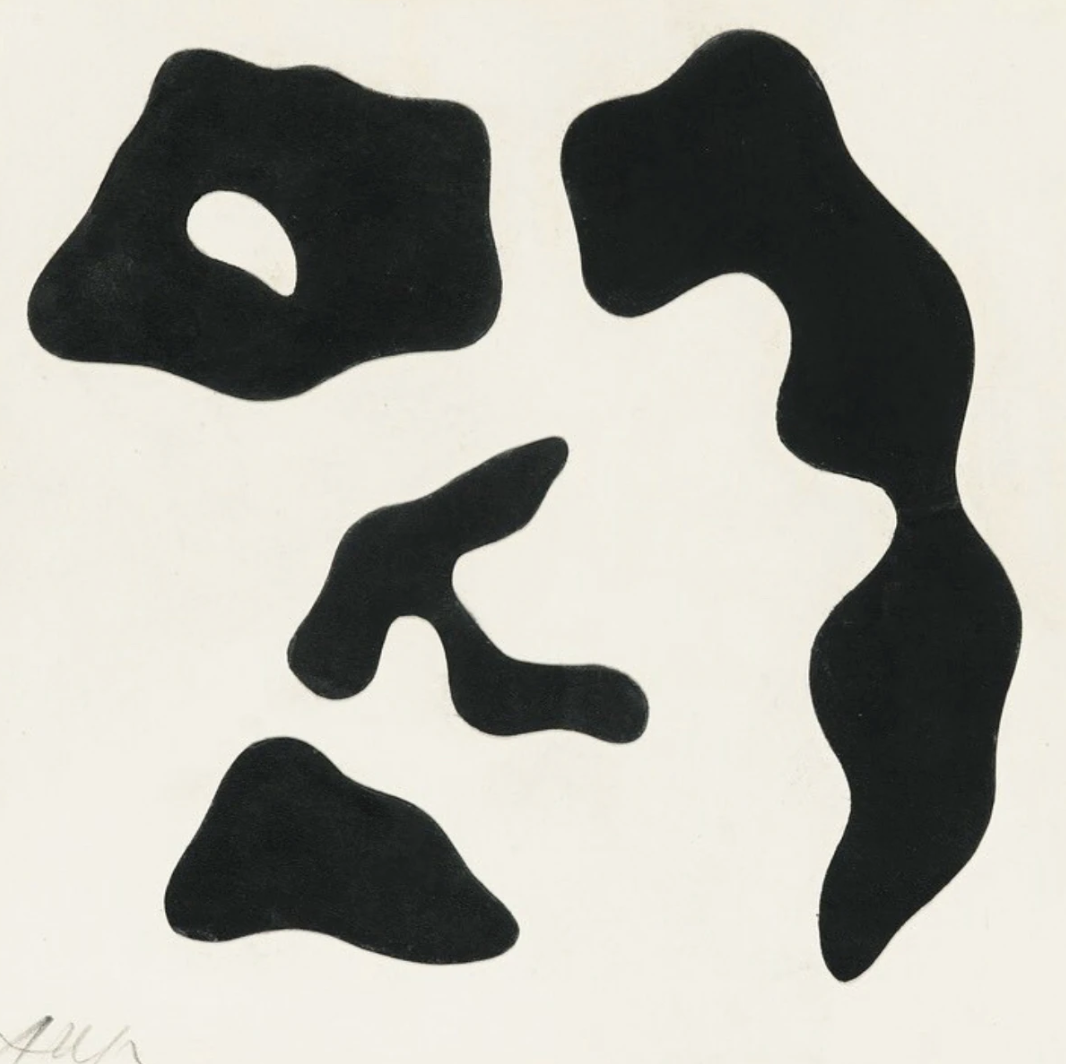
Art by Jean Arp, "Decoupages," 1961
What If Your Body Can Speak?
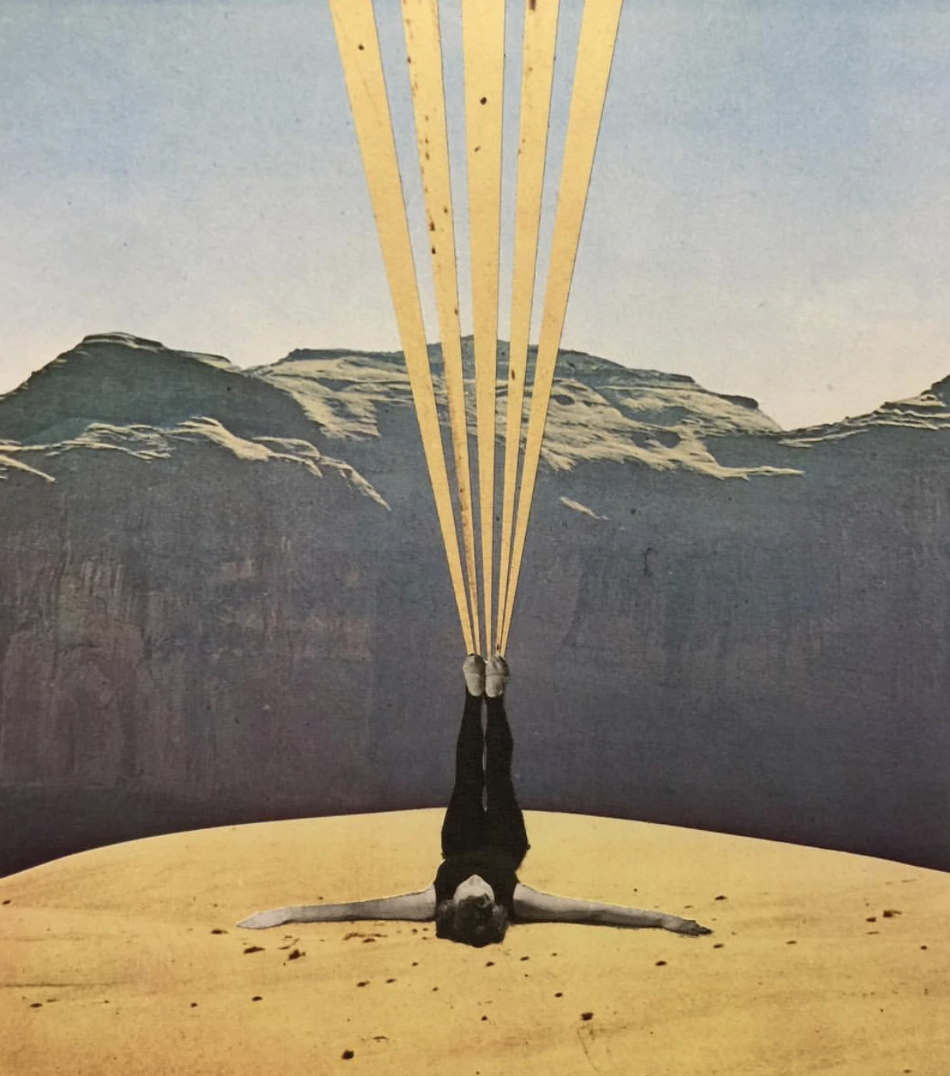
Traditional psychotherapy operates by "top-down processing” - observing, monitoring, integrating and planning through thinking and speaking.
At Flow, you may experiment with “bottom-up processing."
We'll help you mindfully track a sequence of physical sensations and impulses as they progress through your body, while temporarily disregarding the emotions and thoughts that arise.
Awareness, as opposed to avoidance, of your internal states allows feelings to be known, and to be used as guides for action. By being aware of your sensations, we will be able to introduce new options to solve problems.